

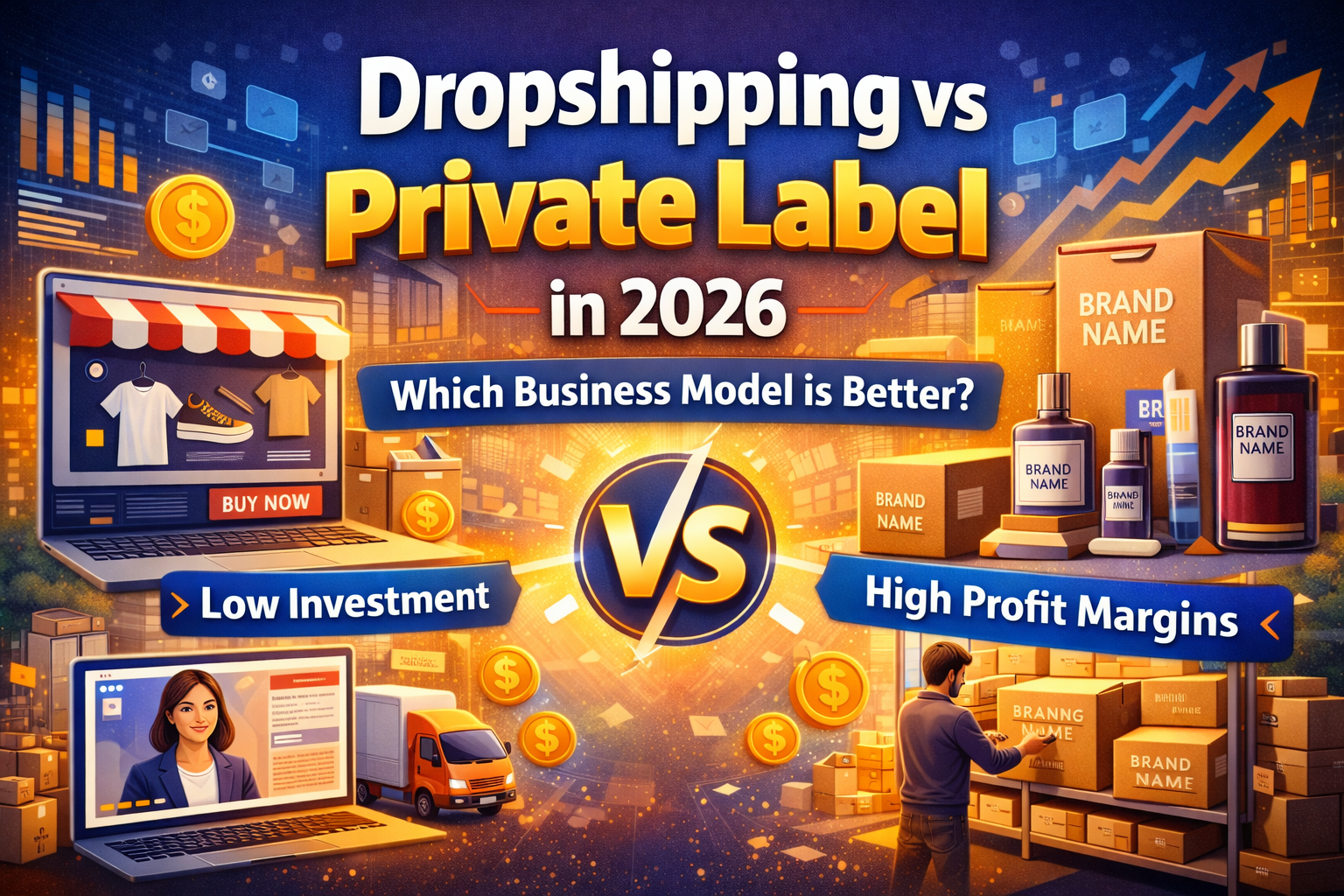
Dropshipping vs Private Label in 2026 – Which Business Model is Better?
Confused between dropshipping and private label? Here is a complete comparison for 2026 including investment, profit margins, and scalability.
E-commerce continues to grow rapidly in 2026. However, selecting the right business model is critical for long-term profitability.
Two of the most popular models are:
Both can generate strong revenue. But they differ significantly in investment, margins, control, and scalability.
This detailed guide compares Dropshipping vs Private Label 2026 objectively so you can choose the right strategy.
What is Dropshipping?
Dropshipping is an e-commerce model where you:
- Sell products without holding inventory
- Partner with third-party suppliers
- Ship products directly from supplier to customer
You act as a marketer and storefront owner, not a manufacturer.
How It Works
- Customer places order on your website
- You forward order to supplier
- Supplier ships directly to customer
- You keep the profit margin
Pros of Dropshipping
- Low capital required
- Easy to start
- No warehouse needed
- Minimal operational risk
- Fast product testing
Cons of Dropshipping
- Lower profit margins (10–30%)
- High competition
- Limited brand control
- Shipping delays (if international suppliers)
- Dependence on supplier reliability
What is Private Label?
Private labeling means selling products manufactured by a third party but branded under your own name.
You control:
- Branding
- Packaging
- Product positioning
- Pricing strategy
How It Works
- Find a manufacturer
- Customize product with your brand
- Order inventory in bulk
- Sell through your own store or marketplaces
Pros of Private Label
- Higher profit margins (30–70%)
- Strong brand equity
- Customer loyalty
- Better pricing control
- Long-term asset creation
Cons of Private Label
- Higher upfront investment
- Inventory management required
- Risk of unsold stock
- Longer setup time
Dropshipping vs Private Label 2026 – Detailed Comparison
| Factor | Dropshipping | Private Label |
| Investment | ₹15,000–₹40,000 | ₹1,00,000+ |
| Inventory | Not required | Required |
| Risk Level | Low | Medium to High |
| Profit Margin | Lower | Higher |
| Brand Control | Limited | Full Control |
| Scalability | Moderate | High |
| Long-Term Value | Low | High |
Which is Better in 2026?
The answer depends on your goal.
Choose Dropshipping If You Want:
- Quick market testing
- Low-risk entry
- Limited capital
- Short-term income
Dropshipping is ideal for beginners learning e-commerce fundamentals.
Choose Private Label If You Want:
- Long-term brand building
- Higher profit margins
- Market authority
- Customer loyalty
If your vision is to build ONE TOP ALL type of brand positioning, private label creates stronger authority and defensibility in the market.
Market Trends in 2026
- Branding matters more than ever
- Customers trust established brands
- Ad costs are increasing
- AI tools simplify product research
- Logistics systems are more efficient
Because advertising costs are rising, building brand loyalty through private labeling offers better long-term sustainability.
Strategic Recommendation
Many successful entrepreneurs follow a hybrid model:
- Start with dropshipping to test products
- Identify winning products
- Convert them into private label brand
This reduces risk while maximizing long-term profits.
Conclusion
Both models work in 2026.
- Dropshipping = Fast, low-risk entry
- Private Label = Long-term brand asset
Choose based on:
- Capital availability
- Risk tolerance
- Business vision
- Time commitment
If your goal is quick cash flow, dropshipping works.
If your goal is building a scalable brand with authority, private label is superior.
If your vision is to build ONE TOP ALL type of brand positioning, private label creates stronger authority and defensibility in the market.
Market Trends in 2026
- Branding matters more than ever
- Customers trust established brands
- Ad costs are increasing
- AI tools simplify product research
- Logistics systems are more efficient
Because advertising costs are rising, building brand loyalty through private labeling offers better long-term sustainability.
Strategic Recommendation
Many successful entrepreneurs follow a hybrid model:
- Start with dropshipping to test products
- Identify winning products
- Convert them into private label brand
This reduces risk while maximizing long-term profits.
Conclusion
Both models work in 2026.
- Dropshipping = Fast, low-risk entry
- Private Label = Long-term brand asset
Choose based on:
- Capital availability
- Risk tolerance
- Business vision
- Time commitment